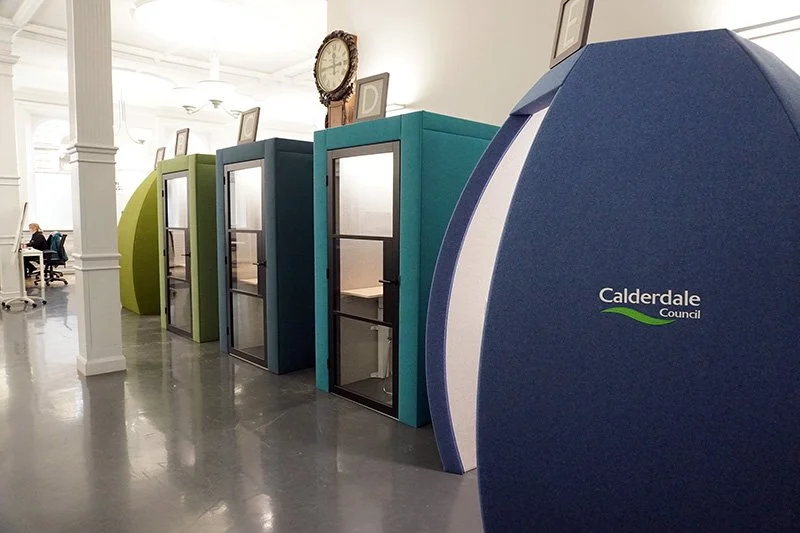
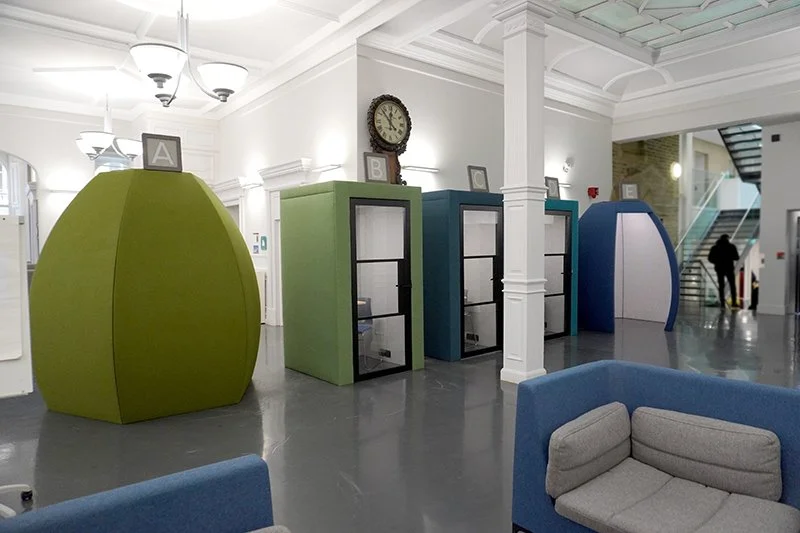
Pods That Interact with Buildings: The Next Evolution of Workplace Design
Date 07.04.2026 Author: Stuart Jones
For years, acoustic pods have been treated as simple additions to a space — drop-in solutions designed to create privacy in open-plan environments.
But what if pods weren’t just placed into buildings…
What if they actively interacted with them?
At AgileAcoustics, we believe this is the next major shift in workplace and estate design.
From Static Furniture to Active Infrastructure
Most pods on the market today are passive.
They sit in a space.
They serve a function.
And beyond that — they do very little.
But buildings themselves are becoming increasingly intelligent:
Fire systems respond in real time
HVAC systems adapt to occupancy
Lighting adjusts to usage patterns
Yet pods — often placed right at the heart of these environments — remain disconnected.
This creates a mismatch.
Because if a pod is part of the workplace ecosystem…
shouldn’t it behave like one?

What Does It Mean for a Pod to “Interact” with a Building?
A new generation of pods is emerging — designed not just to sit within a building, but to respond to it.
This could include:
Fire & Safety Integration
Pods that connect directly to building fire systems — responding automatically when alarms are triggered.
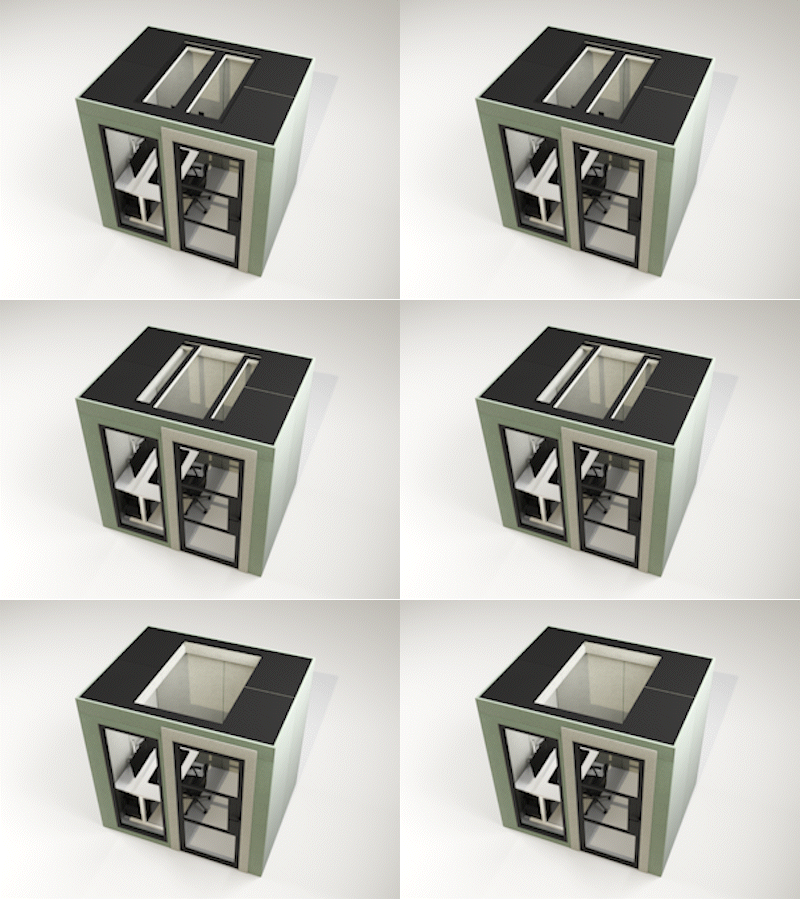
Roofs that open to support smoke clearance strategies
Systems that ensure compliance without compromising design
Maintaining audibility of alarms inside the pod (a critical requirement for public sector estates)
Environmental Responsiveness
Pods that actively manage internal conditions based on real-world usage.
CO₂ monitoring and ventilation control
User-adjustable airflow combined with automated responses
The ability to balance comfort with energy efficiency
Estate-Level Flexibility
Perhaps the most transformative shift of all.
Pods that don’t just sit in a layout — but can adapt with it.
With innovations like Raise&Relocate, pods can:
Move without dismantling
Be repositioned in minutes, not days
Support changing team structures and space requirements
This turns the pod into something far more powerful:
A dynamic asset within the estate.
Why This Matters for Estates & Facilities Leaders
For estates teams, this shift is significant.
Because it moves pods from:
A capital purchase
toA flexible, integrated part of the building strategy
It also helps address some of the biggest challenges they face:
Changing workplace needs → spaces can adapt without refurbishment
Compliance concerns → integration with fire and safety systems
Cost of change → reducing expensive moves, reworks, and downtime
In short, it aligns pods with how modern estates are actually managed.

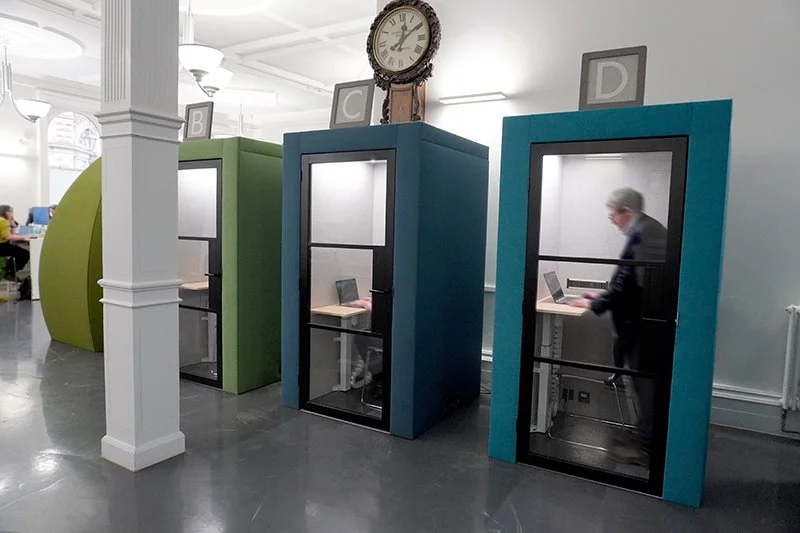
A Step Towards Space-Adjustable Buildings
This idea connects to a much bigger concept:
What if workplaces weren’t fixed at all?
Instead of designing a layout once and living with it for years, we move towards environments that continuously evolve.
Pods that interact with buildings are an early expression of this thinking.
Not just furniture.
Not quite architecture.
But something in between.
The Future: Connected, Responsive, Adaptable
We are only at the beginning of this shift.
But the direction is clear:
Pods will become connected devices within buildings
They will respond to safety, environmental, and occupancy systems
And increasingly, they will physically adapt to changing needs
The question is no longer:
“Where do we put a pod?”
It’s:
“How does this pod behave as part of our estate?”
Final Thought
At AgileAcoustics, we don’t see pods as static objects.
We see them as part of a wider movement towards:
Spaces that flex, include, and respond in real time.
And when pods start to interact with buildings —
that’s when they truly become part of the architecture of work.