

Future-Proofing Acoustic Pods: Designing for Retrofit, Not Restriction
Date 10.04.2026 Author: Stuart Jones
Introduction
One of the biggest challenges facing estates teams today isn’t just what buildings need now — it’s how they adapt over time.
And yet, many acoustic pods are still designed as closed, fixed systems.
What happens when requirements change?
A building strategy evolves
Fire detection requirements are updated
A client wants to introduce sprinklers or sensors
Or compliance interpretation shifts
In many cases, the answer is costly:
cut into the pod, dismantle it, or replace it entirely.
At AgileAcoustics, we think there’s a better way.

Pods Should Adapt Like Buildings Do
Buildings evolve.
Services get upgraded.
Systems get retrofitted.
So why should pods be any different?
If pods are truly furniture — not fixed construction, then they should be designed to:
Integrate with building systems
Adapt to changing compliance requirements
Allow access without disruption
This thinking sits at the heart of our approach to product design.
Introducing Retrofit-Ready Pod Design (Powered by AgileDECOR)
Using principles from our patented AgileDECOR system, we’ve developed a way to make pods retrofit-ready by design.
What does that mean in practice?
We can incorporate:
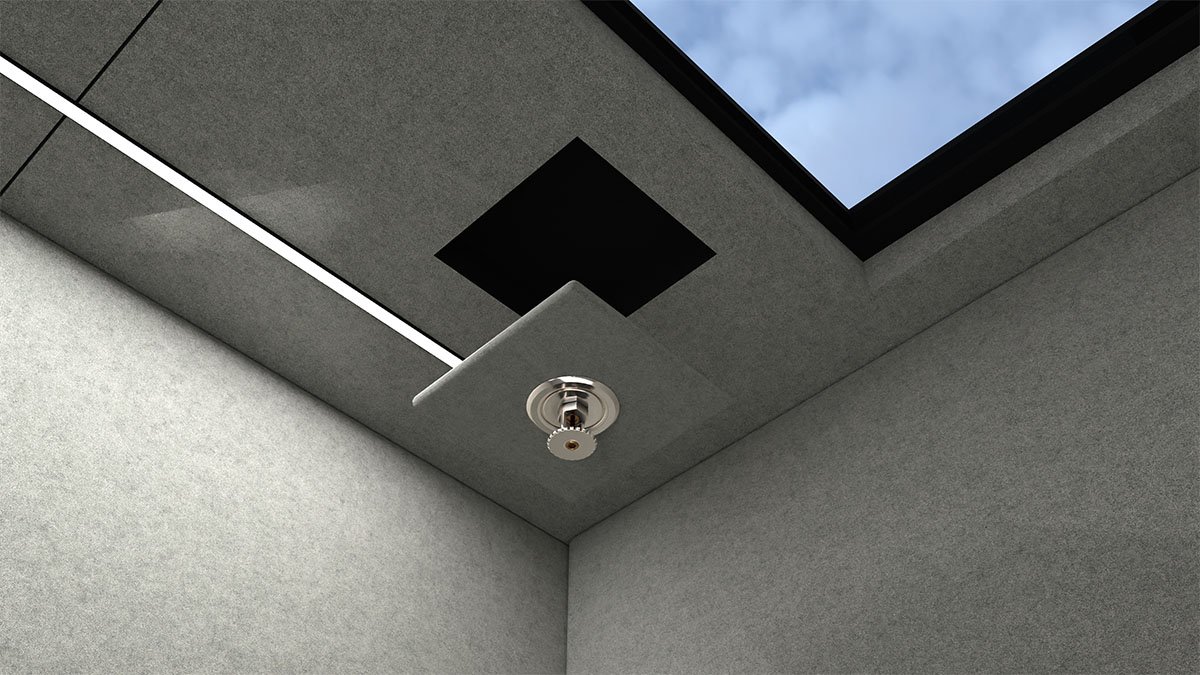
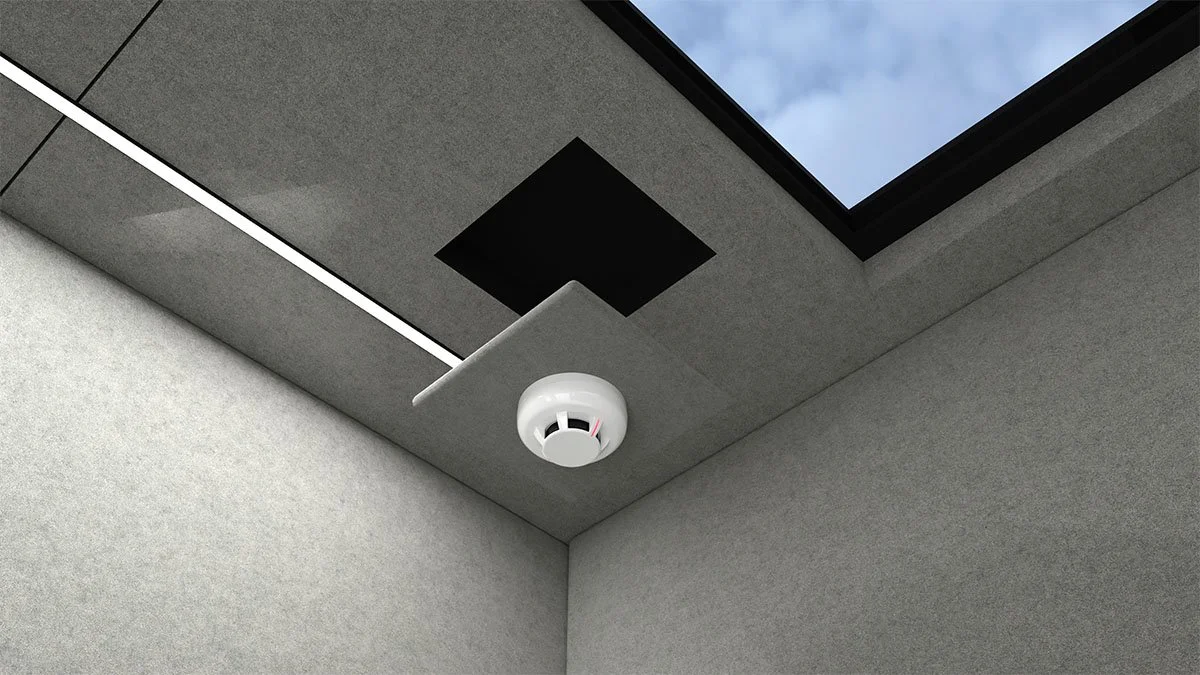
Pre-designed access apertures within pod roofs and structures
Push-fit fascia panels that can be easily removed and reinstated
Service access points aligned with likely M&E requirements
This allows for non-invasive upgrades — even after installation.
Why This Matters for Fire Detection & Suppression
Fire strategy is one of the most common areas where requirements evolve.
Depending on the building and interpretation, clients may later wish to introduce:
Sprinkler heads
Smoke detectors
Fire alarm interfaces
With traditional pods, this creates friction.
With retrofit-ready pods, it becomes straightforward.
Instead of:
Cutting into finished panels
Compromising acoustic performance
Voiding warranties
You get:
Clean access
Minimal disruption
Maintained performance
Designed for Uncertainty
Let’s be honest — no one has perfect foresight when specifying a workspace.
And that’s especially true when it comes to:
Building Control interpretation
Fire officer preferences
Future compliance updates
So rather than trying to predict everything upfront, we design pods that can respond later.
Part of a Bigger Shift: Pods That Work With Buildings
This is part of a wider shift in thinking:
Pods shouldn’t sit in buildings.
They should work with them.
From:
Integrated ventilation strategies (AgilePOD Flow)
To retrofit-ready service access
We’re moving towards pods that behave more like adaptable building components than static furniture.
A Smarter Way to Specify
For architects, consultants and estates teams, this creates a new opportunity:
Instead of over-engineering for every possible future scenario, you can:
Specify with confidence
Allow for future adaptation
Reduce long-term risk
Conclusion
The question is no longer:
“Does this pod meet today’s requirements?”
But:
“Will this pod still work when things change?”
At AgileAcoustics, we believe the answer should always be yes.